


MBBS (Singapore),
MRCOG (UK),
FAMS (Singapore)

Is Emsella Suitable for All Types of Urinary Incontinence?
Urinary incontinence can have different underlying causes, which means the same treatment will not be appropriate for every patient. This matters when considering Emsella because the treatment works by stimulating contractions of the pelvic floor muscles.
Whether Emsella may be appropriate therefore depends partly on the type of urinary incontinence and whether reduced pelvic floor support is contributing to the leakage. Stress urinary incontinence may align more closely with this treatment mechanism, while other forms of leakage may require a different management approach.
What Determines Whether Emsella Is Suitable for Urinary Incontinence?
Emsella is a non-invasive treatment that uses high-intensity focused electromagnetic (HIFEM) technology to stimulate repeated pelvic floor muscle contractions while the patient remains seated. Because its mechanism centres on the pelvic floor muscles, suitability depends partly on whether reduced pelvic floor support is contributing to the leakage.
The Pattern of Urinary Leakage
How and when leakage occurs can provide clues about the type involved. Leakage during coughing, sneezing or physical activity is more consistent with stress incontinence. A sudden, difficult-to-control urge followed by leakage is more consistent with urge incontinence. Some women experience both patterns, which is known as mixed urinary incontinence. Identifying the symptoms present is important because the stress and urgency components may require different management approaches.The Reason Bladder Control Is Affected
Pelvic floor weakness can reduce support around the bladder and urethra, making leakage more likely when abdominal pressure rises. Where reduced pelvic floor support is contributing to the symptoms, a pelvic floor-focused treatment may therefore be more relevant. If pelvic floor weakness is not the main reason for the leakage, strengthening these muscles alone may not address the underlying problem. Assessment can help establish the likely type and cause of urinary incontinence before deciding whether Emsella should form part of the treatment approach.
Which Types of Urinary Incontinence May Be Suitable for Emsella?
Different types of urinary incontinence have different underlying mechanisms, so Emsella may be more relevant to some forms of leakage than others.
Stress and Mixed Incontinence
Stress urinary incontinence causes leakage when pressure increases during activities such as coughing, sneezing, exercise or lifting. When reduced pelvic floor support contributes to this leakage, strengthening the pelvic floor may form part of management and Emsella may be considered in suitable patients. Mixed incontinence includes both stress and urgency symptoms. Emsella may be considered for the stress component where pelvic floor weakness is involved, but the urgency component may require separate management.Urge Incontinence
Urge urinary incontinence involves a sudden need to urinate that is difficult to defer, followed by involuntary leakage. Because urgency symptoms are not necessarily caused by reduced pelvic floor support, management may need to address bladder function rather than relying on pelvic floor strengthening alone.When Leakage Has Another Underlying Cause
Some forms of urinary leakage may be related to an underlying medical condition or difficulty reaching and using the toilet independently. In these situations, identifying and managing the primary cause is more important than assuming pelvic floor strengthening will address the leakage.Other Factors to Consider
Even when the pattern of incontinence suggests that pelvic floor strengthening may be relevant, Emsella may not be appropriate for every patient. Medical history, pregnancy and the presence of certain implants or medical devices may also affect suitability and should be discussed with the doctor before treatment.

When a Different Treatment Approach May Be Needed
If pelvic floor weakness is not the main cause of urinary leakage, treatment may need to address the underlying problem instead. The approach will depend on the type of incontinence and what is contributing to the symptoms.
For example, urgency-predominant symptoms may be managed with approaches that focus more directly on bladder function, while functional incontinence may require practical strategies to improve access to the toilet. Pelvic floor exercises or other treatments may also be considered depending on the type and severity of leakage.
This is why identifying the likely cause of urinary incontinence matters before starting treatment. Emsella may form part of management where pelvic floor weakness is relevant, but another approach may be more appropriate when the leakage has a different underlying cause.
Finding the Right Approach with Dr Chen Chern Yi
If you experience urinary leakage, establishing the type of incontinence and what may be contributing to it can help guide the next step. This is particularly important before considering a treatment such as Emsella, as pelvic floor strengthening may not address every cause of bladder leakage.
Healthcare for Women provides assessment and management for women experiencing urinary incontinence, including Emsella treatment where appropriate. Dr Chen Chern Yi is an obstetrician and gynaecologist who manages urinary incontinence in women and can advise whether Emsella or another treatment approach may be appropriate based on their symptoms.
If urinary leakage is affecting your daily activities, book an appointment to discuss your symptoms and whether Emsella may be suitable for you.
FAQs About Emsella and Urinary Incontinence
Is Emsella only suitable for women who have given birth?
No. Emsella is not limited to women who have given birth. Pregnancy and childbirth can affect the pelvic floor, but pelvic floor weakness can also occur in women who have never given birth. Whether treatment is appropriate therefore needs to be assessed individually.
Can urinary incontinence return after Emsella treatment?
Can Emsella be considered if Kegel exercises have not helped?
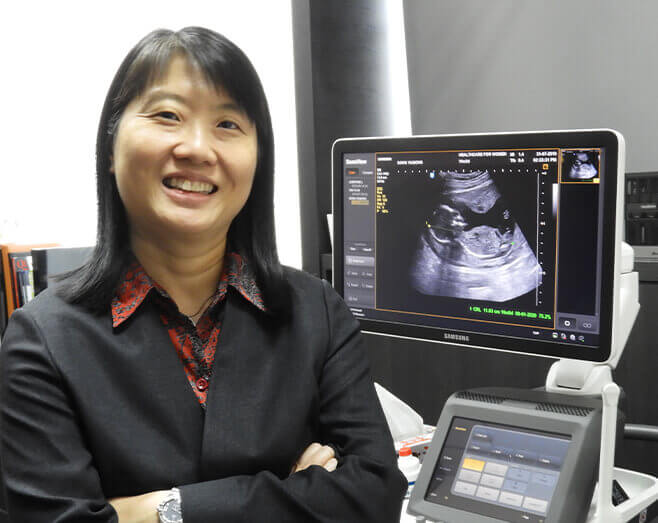
Meet Our Specialist
Dr Chen Chern Yi is an obstetrician & gynaecologist with over 20 years of experience providing comprehensive women's healthcare. She manages a wide range of gynaecological and obstetric conditions, offering personalised care for women at every stage of life, from adolescence and reproductive health to pregnancy, menopause and preventive health screening.
Dr Chen graduated from the National University of Singapore and completed her specialist training at KK Women's and Children's Hospital before establishing her private practice in 2002. She is a Member of the Royal College of Obstetricians & Gynaecologists (UK), a Fellow of the Academy of Medicine, Singapore, and holds a Postgraduate Diploma in Acupuncture. Committed to delivering evidence-based and compassionate care, Dr Chen works closely with each patient to support their long-term health and well-being.
More About Dr Chen

